Currently investigating the usage of nHibernate (fluently) as an ORM
to be used within our software. First impressions are that I like it a
lot. I feel that we should have made this move a long time ago but
sometimes with the time constraints its not always feasible to stray
from well trodden paths… Currently flying at plenty of new tech though
so expect plenty of postings!
Whilst putting together my first sample classes I came across a small
gotcha whilst defining my LogonClass and retrieving the associated
data. Code snippets follow:-
Read full blog here.
Written by Conrad Rowlands, Senior Systems Architect and Developer, DSCallards.
Currently investigating the usage of nHibernate (fluently) as an ORM
to be used within our software. First impressions are that I like it a
lot. I feel that we should have made this move a long time ago but
sometimes with the time constraints its not always feasible to stray
from well trodden paths… Currently flying at plenty of new tech though
so expect plenty of postings!
Whilst putting together my first sample classes I came across a small
gotcha whilst defining my LogonClass and retrieving the associated
data. Code snippets follow:-
Read full blog here.
Written by Conrad Rowlands, Senior Systems Architect and Developer, DSCallards.
Working on one of our long term projects recently I came across a
gotcha that I have never encountered before when working with Xml Schema
documents. Whilst researching and correcting this issue I have
subsequently seen a lot of other people making the same mistake on many
other forums and so I thought I should share.
The issue arose when I had a loaded Xml document that I subsequently
wished to validate against a schema that we have defined, fine I
thought, I will use the following code…. More.
Written by Conrad Rowlands, Senior Systems Architect and Developer, DSCallards.

I know, I know…., in an ideal world we’d all have the latest and
greatest browsers but in the real world companies are not so ‘lithe’
when it comes IT infrastructure.
Recently whilst putting a .NET web project to bed we had some reports
from the field of some rendering issues with Internet Explorer 7. Of
course we had tested IE 7 using the compatibility modes present within
later versions of IE but seemingly this does not throw up many issues
that arise in the ‘real’ browser.
One such issue being reported has been recorded in my blog, here.
Written by Conrad Rowlands, Senior Systems Architect and Developer, DSCallards.
Recently whilst putting a .NET web project to bed we had yet more
reports from the field of some rendering issues with Internet Explorer
7. Of course we had tested IE 7 using the compatibility modes present
within later versions of IE but seemingly this does not throw up many
issues that arise in the ‘real’ browser.
 I know, I know…., in an ideal world we’d all have the latest and
greatest browsers but in the real world companies are not so ‘lithe’
when it comes IT infrastructure.
The issue being reported was that one form displaying an accordion
control, which in turn had embedded within it a scrollable div which in
turn contained three or four divs as well as a JQGrid was having ‘issues
of parentage’… When the main scrollable div was being scrolled all
underlying divs were being rendered correctly and scrolling with the
content whilst the JQGrid was not moving at all, just merely floating in
space and generally getting in the way. After a lot of digging I found
the following solution that cured my issues:- The main HTML was defined
thus
I know, I know…., in an ideal world we’d all have the latest and
greatest browsers but in the real world companies are not so ‘lithe’
when it comes IT infrastructure.
The issue being reported was that one form displaying an accordion
control, which in turn had embedded within it a scrollable div which in
turn contained three or four divs as well as a JQGrid was having ‘issues
of parentage’… When the main scrollable div was being scrolled all
underlying divs were being rendered correctly and scrolling with the
content whilst the JQGrid was not moving at all, just merely floating in
space and generally getting in the way. After a lot of digging I found
the following solution that cured my issues:- The main HTML was defined
thus
with the ‘QuestionnaireGrid’ being the location that the javascript
JQGrid is rendered into, The issue however seems to lie with the parent
div and not the JQGrid itself, what I needed to do was attach a style
via the css to the ‘QuestionnaireGridContainer’ div like thus:
This ‘position:relative’ style in this instance
seems to explicitly force all children objects to behave correctly with
regard to their location within time and space and now when i scroll my
div content all child objects are scrolled exactly as I would expect.
Written by: Conrad Rowlands, Senior Systems Architect and Developer, DSCallards
As part of a recent release of a web application we decided that in
order to make the best use of error logs being created by Elmah we
should email these to stakeholders as and when they happen to improve
the general response times. Here is how we set up ‘that thing’ in our
.NET MVC4 application! The red sections indicate properties that were
either added or edited to enable the email functionality and green
section indicate those fields you will need to change to reflect your
choice of smtp server.
Click here for the full blog.
Written by: Conrad Rowlands, Senior Systems Architect and Developer, DSCallards,
 Whilst coding up a recent .NET MVC application built heavily using
JQGrid I came across a requirement which to be honest I struggled with
at first . In short I wanted to, on a column by column basis, colorise
the icons that were to be displayed. Now JQGrid supports a icon colorset
which seemingly cannot be changed easily so in the end I had to resort
to changing the styles. Here is how I achieved this, warts and all….
Whilst coding up a recent .NET MVC application built heavily using
JQGrid I came across a requirement which to be honest I struggled with
at first . In short I wanted to, on a column by column basis, colorise
the icons that were to be displayed. Now JQGrid supports a icon colorset
which seemingly cannot be changed easily so in the end I had to resort
to changing the styles. Here is how I achieved this, warts and all….
Firstly of course JQGrid uses the standard set of JQuery Ui Icons to
provide its user interface. I say ‘Icons’ but this is of course provided
as one image which is broken up into sprites of 16 x 16 pixels, more of
that later. So the first step is to download the set of colour icons
that you require…. JQueryUI.com provides a standard set of these icons
rolled in every colour you can dream so its in fact very easy. The
hardest part is arriving at your chosen colours!
Click here for the full blog.
Written by: Conrad Rowlands, Senior Systems Architect and Develope, DSCallards
Now I can’t lie to you, I’m not an insanely practical man….. When it
comes to home repairs and the like I’d prefer to pay a man (or woman)
who knows what they are doing to do the job; They won’t swear half as
much, will generally get the job done without resort to every ill
fitting tool in my toolbox, without the use of a calendar and they’ll
also have an understanding of the problems that are likely to be
encountered on the way. More importantly they’ll plan to avoid the
potential issues. (in)Famously I once tweeted that ‘there are only so
many ways that 15 pieces of wood can be put together to make a wardrobe,
I know because I’ve tried all the others!’
I once knew a guy who was immensely practical, being a general
builder for much of his life I asked, and he agreed, to assist me with
repairing some windows as I wanted to learn; maybe I could become self
sufficient in all my windowing needs and move onto doors and the like…
possibly take over the world, I don’t know what I was thinking. Anyway
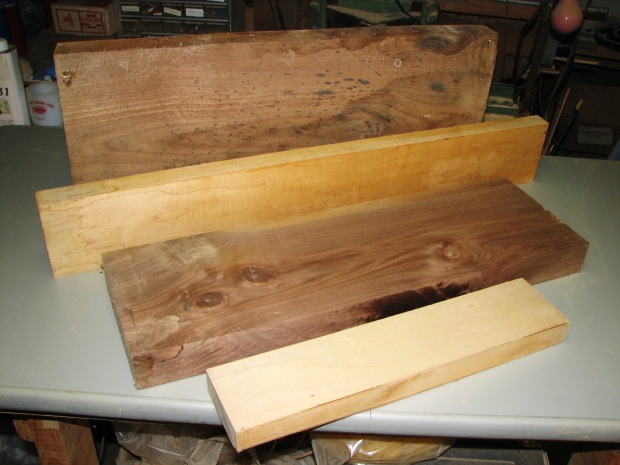
we first needed some strips of wood to replace the pieces that we were
going to have to break in repairing the window. How hard could this be? I
mean it’s just a piece of wood right, so long as the dimensions are
fine and it looks clean…. However I was aware of time passing as we
stood in the local ‘shed’ looking at various seemingly identical pieces
of strip wood. After he had discarded what seemed like the 7th identical
piece I asked what he was doing… I don’t remember his exact response
but I do remember that he was particularly keen to ensure that the grain
of the wood was absolutely as he needed for a good deal many reasons.
It was at this point that my practical life in windows was curtailed as
there was clearly way more to think about that I had previously
imagined.
I know what you re thinking….. no code snippets in a developer blog?
The answer this week is a resounding No! Before one line of code can be
written the problem MUST be understood in it’s entirety, you can’t code
for a problem until you understand the problem and you can’t code a
solution unless you understand how your chosen platform allows you to
best solve a problem, well you could but like with the window if we’d
used just any piece of wood it would likely have just broken midway
through the job.
I guess you can sum this post up in one word ‘Experience.’
Written by: Conrad Rowlands, Senior Systems Architect and Developer, DSCallards