Thursday, 7 June 2012

How Business Intelligence Can Shape Your Future


A few years ago we helped the UK office of Phoenix Contact, a leading German manufacturer of electrical connection and industrial automation equipment, after they were tasked with driving UK Sales and increasing market share. Lee Grogan, Sales Manager, is checking back in with them to see how implementing BI has shaped their future as a growing business. Martin Potter, Sales and Marketing Director at Phoenix Contact, gives us some insight into how the project went and where they are now.

One of the issues we hear about time and time again from our clients is that their own data is very difficult to both manage as well as access. This not only affects efficiency but it can also affect the bottom line because, without that data, the outgoing costs and incoming revenues can be obscured. What issues led your office to consider implementing a BI solution?

Martin: Information within our company was traditionally hard to access and regarded as confidential. Each department was working hard, but on its own agenda. The new management team wanted to refocus the company on sales and ensure everyone was working towards the same objectives. By increasing access to information, we hoped to transform our culture and energise staff to deliver the results we were looking for.

We have seen situations where a consultant company has come in and basically dictated to their client how they need to do things without regard to their client’s business structure and even their working environment. This is something that we discourage within our own company as it’s important to us that we work in concert with our clients rather than simply telling them what to do. Can you give our readers your thoughts on what it was like working with us on this project?

Martin: DSCallards really listened to our needs, often facilitating discussions we might not have had internally, to get a clear picture of our objectives and where the value lay. They didn’t dictate how we should do business – they simply enabled us to get more value from our data to hit our targets while preserving our uniqueness.”

In the end, the most important thing to us is that the solutions we implement work for our clients and help them create a better business. How has implementing a BI solution helped you meet your goal of increasing your market share and drive sales?

Martin: Key to transforming our performance was exposing what was going on in our business, as this tends to concentrate people’s minds on understanding their own impact and improving their individual or departmental performance…You can see the effect of the numbers on performance in real-time, which has an amazing influence.

Well there you have it. Implementing a robust BI solution helped this business gain insight into what was going on and where they could improve. That’s the kind of thing that can give you an edge over your competitors in this tough market. Want to know more about our project with Phoenix Contact? You can read the entire case study on our website along with several others. Once you are done reading up on how we helped others, feel free to wander around the rest of our website to find out how we can help you.

Wednesday, 6 June 2012

Ensure Your View of Information is Crystal Clear


Most people in business are accustomed with having to create reports at work- whether it is a finance report, a sales report or a marketing report- the list is endless. However, a surprisingly high number of people aren’t so familiar with business dashboards. Many people that get in touch with us aren’t even aware what a business dashboard is and so don’t realise that it can radically transform the delivery of information within a business or organisation. 

Reporting is one of those routine duties; whether it is on a daily, weekly or quarterly basis. As such it is generally the norm that little or no thought is put to improving the presentation of the information. We find that those individuals that try and think outside of the box realise that presenting a report to consumers with reams of information isn’t the answer, as the information isn’t easily accessible. How many of you are familiar with providing a report to say sales agents, management or company directors only to have them get back to you with further requests often alluding to the fact they haven’t got time to read the information you have presented them with?

We typically find that Dashboards are especially popular with senior management and those in sales, as they are often the individuals that require quick answers to questions. Instant access to business critical information is where dashboards really come into their own.
Business dashboards when developed properly provide:
  •  At-a-glance views of key performance indicators (KPIs) relevant to a particular objective or business process.
  •  A simple view of information, which communicates easily.
  •  Summaries, key trends and comparisons. Meaning that it’s easier to identify patterns, trends and anomalies.
  • Organisations with meaning and useful data.

What’s more, development is currently being undertaken for the “next generation” of SAP Crystal Dashboard Design. As demo’d by SAP there is a new dashboard prototype which will in essence centre on a new HTML5 format. Historically dashboards have been rendered in a flash format however; the new HTML5 version will allow you to integrate dashboards into mobile devices.

If you feel that you would like to improve the presentation of information within your organisation why not take a look at some examples we have developed: http://www.dscallards4bi.com/dashboards and perhaps it will help start a radical transformation in your business.

Written by:  Abby Vanstone, Sales Executive, DSCallards 

Monday, 28 May 2012

Where Will Voice and Gesture Technology Really Help ...?

I wonder how many people would agree that using technology to improve things was ultimately their main reason for using it? Sometimes I think this understanding is lost or even forgotten altogether as technology that inspired change some years ago becomes taken for granted with its everyday use or is no longer aligned to support a process and therefore simply used as it’s the only option available.

So when we were recently contacted by a student project team from  Kingston University with an idea for a software application that encompassed this belief I have to say I got a little excited! It may get some of you a little excited too!

As I say we were contacted by the Kinetica project team  from the School of Computing and Information Systems Faculty of Science, Engineering and Computing at Kingston University, London. They needed our help with providing some software development kits so they could develop a medical software application which had been successful entered into the Imagine Cup 2012, a worldwide Microsoft competition, which looks for students to create something where technology helps solve real-world challenges. Their application, called MediKinect, addresses the real world problem surgeons face when utilising medical images to support their work during operations. The practicalities of the current situation are as follows. 

Surgeon in mid-flow of operating needs to get a better look at the situation so temporarily leaves the operating table to review the necessary images taken of the patient on a nearby PC. Nothing that wrong here you may think and I include myself here. However, there are greater forces at work and the reality of the situation is very different when it is brought to your attention the doctor may need to do this more than a few times over the duration of an operation. In fact conservative estimates suggest it could add up to on average an additional 90 minutes operating time. Furthermore each time a doctor addresses the PC they are required to touch a keyboard that in turn requires re-scrub and glove before returning to the patient as they have not found a better way to sterilise this requirement. 

What the Kinetica Project team have done is to think around this problem and come up with a software application that many of us will not believe isn’t already widely used. MediKinect is fundamentally a voice and gesture recognition software tool for medical operating theatres. Think of the film ‘Minority Reports’ or take a look at Corning’s mesmerising ‘You Tube’ video “A day made of Glass 2” (about 3 mins in) and you will understand the concept of where this is going.

Last week I was lucky enough to visit them and have a look at their first prototype. I could feel the tension as I’ve felt it myself when in a live demo situation. However, I’m pleased to report unlike some of my own experiences this demonstration was flawless. I sat with open mouth as voice commands were given and a medical image of a 3D skull were displayed on a flat screen on the wall. And as you will have seen watching someone play on a games console like the WII (but without a controller) the image could be manipulated by the simple movements of the hand.

It sort of makes sense if you think of the interactions we share with one another and how we use sound, sight, touch, even smell to get to a successful outcome. Why then would this not apply to our interactions with technology applications? The more senses you can use, wouldn’t that improve the chances of a successful outcome?

Anyway! What does this mean for this particular software application, well apart from indicating a very promising future ahead for its developers you only have to reference the corning video to realise the use of this type of technology application will improve the procedures within operation theatres and ultimately the successful outcome of the patient. For me this example of technology improving things is inspiring and certainly one I wanted to share.   

If you would like to read a press release then you can do so clicking here. Otherwise, the next stage of the competition will shortly be announced as project teams must submit their entries by the end of May. Everyone at DSCallards wishes Team Kinetica every success and will be following their progress. I’m sure we will be hearing more the this in the not too distance future.

Written by Ben Hedger, DSCallards


Tuesday, 1 May 2012

Why Won't My Crystal Reports Work Like It Should??


So you’ve got Windows 7 now, it works great , you love the new features, the re sizing and “snap to docking”,” peeking at windows” too, all  fantastic ….. but your Crystal Reports just don’t work like they should, they won’t view properly, some wont print or export and  some won’t even open and instances crash…WHY!

Well you probably need to upgrade to the latest version of Crystal Reports too, that’s Crystal Reports 2011.

Some organisations are still using versions of Crystal that are over 12 years old, way before these newer versions of Windows were even thought of , but they are  still surprised that they need to upgrade!

The good news is that there is an upgrade path you can take advantage of that is nearly 50% cheaper than the full license cost so if you want expert advice on which license will get you up and running again, please talk to us first and don’t waste hours of your time scanning the internet for fixes and tweaks that in the long run will let you down anyway.

For more information, visit our website at:  www.crystalreports.co.uk or contact me - Sue Mitchell.

Wednesday, 11 April 2012

Setting Up Shop

Why project managing business intelligence implementations is different

Consider yourself as managing the construction of a building - you need to design, build and furnish it. Now let’s say that building as an IT system.
Where ERP could be an office building – once built and furnished its ready to go – BI is more like a shop. It needs stock and then continual re-stocking.

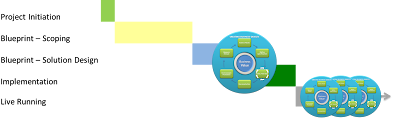
So the initial system implementation for both is based on a similar waterfall-type approach:
ERP and other business process systems tend to have an inherent set of business processes they enable. A BI system, on the other hand, can encompass any number of business processes – just add data sources and business objects.`

A bit like the departments of your shop – you can open new departments as fit consumer tastes.

You also need to think about the stock within those departments, keeping that relevant. Likewise a BI system needs to ensure it business objects stay relevant to the evolving organisation.

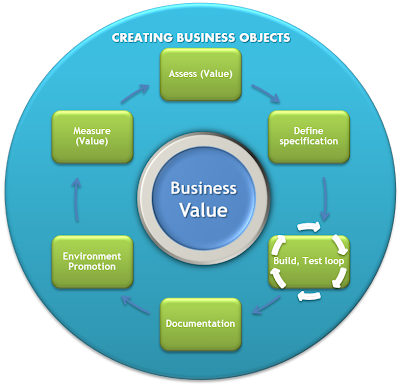
So once live, a BI system is cyclical. This means that during the system implementation the processes you set up to manage this constant change are as important, if not more so, than the initial business objects which are delivered.

This process will be used and stress-tested during the initial implementation for the initial ‘stock up’, and then used repeatedly post go-live
So whether your shop is a supermarket (enterprise-wide BI system) or corner shop users visit your shop to choose the business objects they want.

Some of your stock goes out of fashion and sits on the shelves, eventually needing disposal. In the same vein BI content becomes unused and a well-managed BI system has processes to manage its update or disposal, keeping the system appealing and meaningful to users.

Project management should set up not just the platform but the processes to mean success for the future


  • Acceptance criteria needs to cover both

  • Processes are more important than the content

  • Technology – auditing and impact analysis – can support the processes but is only useful if processes are in place to harness it

Wednesday, 4 April 2012

Data Replication - It's Not My Area of Expertise!

Can you give me an idea for a blog about data replication? Sorry mate that’s not my area of expertise! Great thanks, actually yeah great, that’s a really good point. Who really deep down, if you had a choice would want their area of expertise be data replication? 

Apart from potentially insulting a global community of IT professionals I think I’ve just insulted myself! But honestly how many high schoolers dreamt of analysing data replication logs and the Change data capture routine of a heterogeneous database environment? I would guess not many. And I think that is the point. Most requirements from a business level are straightforward I need data to go from point A, to point B and maybe back again. Sure there are often manipulation needed on the way however really do you want to be spending your whole day on this one?

Whether it's meeting a requirement for Big data, business analytics, or an online application supporting huge numbers of users many businesses will have considered using an off the shelf CDC or data replication software package.

Now I appreciate someone somewhere has a tough job working things out in terms of the routines needed for a resilient data replication process. But once you’ve done the math then what do you want? I say it’s a CDC/ data replication software package that can be easily implemented to manage this process you’ve spilt blood, sweat and tears formulating. Do you want to spend hours having to learn effectively a new language? Do you want to pay someone else to come and teach you how to learn this new language?   

If this rings true for you and you want to an intuitive CDC/ data replication software package then I use DBMoto and data replication isn’t my area of expertise!
Writted by Ben Hedger, Senior Sales Consultant, DSCallards 

Thursday, 22 March 2012

It's a Changing World Out There - Business Intelligence in Retail


Shopping habits are rapidly changing.  There's a massive shift from the high street to online shopping so now is the time for the retailers to really get their finger on the pulse of their business.

As a Business Intelligence Consultant, I’m talking to customers from every conceivable part of industry but more than ever I’m amazed as to the number of retail organisations that I speak to that still don’t have any formal reporting tools in place.

BI in Retail should be able to deliver the ability to access information affecting the entire retail business, often as the data is created,  but recent statistics back up the conversations I’m having with the retail sector  in that only :

50% of retail businesses have formal BI solutions in place, 70% of SMB Retail still use spread sheets as their primary source of analytics over more functional BI tools , such as SAP Crystal Reports, and amazingly nearly 25% of the retail shops on your high street today are still using spread sheets as their only analytical tool! *

Retailers need to use BI in order to predict shopping behaviour and good BI should be able to deliver this information and be able to measure its impact directly to management, store staff and regional staff alike,  at the right time in order to be able to maximise sales. 

By including customer product and performance data in their BI program every retailer can learn who their customers are, what they want today, tomorrow and in a month's time. Improving data access to customer facing staff should be a key strategy for every retailer and this is impossible with manual speadsheets.

Slow and inaccurate BI will lead to out of stock scenarios, customer satisfaction issues, promotional delays and lost sales opportunities.

Good BI in retail impacts on the seasonal swing nature of the business by offering accurate and well planned marketing plans that everyone knows about, well timed store events and correct staffing levels.

Larger retailers who have embraced BI are outstripping smaller vendors as they are able to predict purchasing behaviour, but with SAP Crystal Solutions entry level BI Essentials package it doesn’t have to be BI only for the “Big Guys”.

Written by:  Sue Mitchell, DSCallards Ltd


*Source:   The Opportunity for Business Intelligence Enhancements in Retail - October 2011- Aberdeen Group